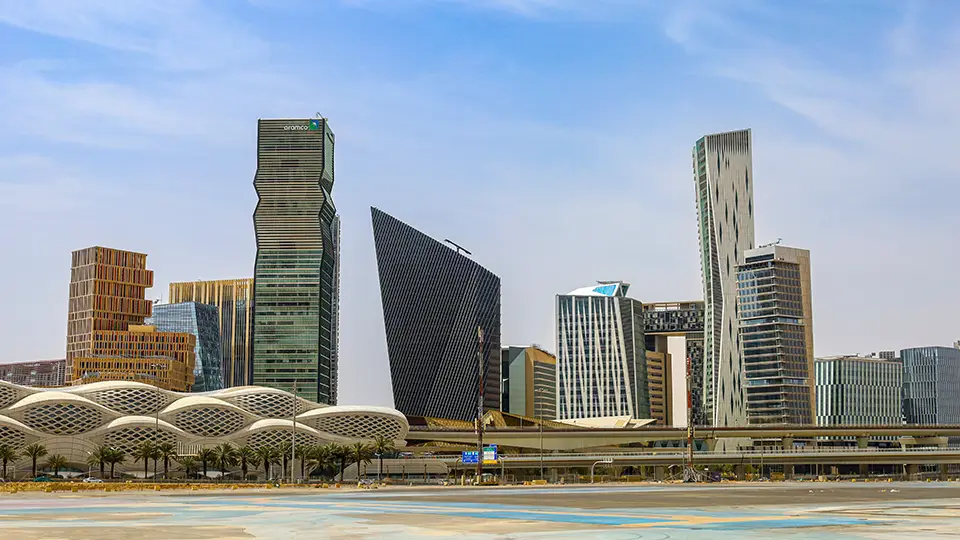
Saudi Arabia now welcomes international investors. Thanks to relaxed rules, it is easier than ever to access the country's financial markets.
If you are thinking about investing in Saudi Arabia, knowing how the country's stock market works is an important first step. Keep reading to find out how the Saudi stock market works, why it is drawing interest from global investors, and how you can start investing in stocks.
About the Saudi stock market
The Saudi stock market is a marketplace where shares of publicly listed companies are traded. Shares are listed and traded on Tadawul, Saudi Arabia's only stock exchange — a regulated platform for buying and selling company shares.
The role of Tadawul in Saudi Arabia
Tadawul is Saudi Arabia's central platform for trading equities. The exchange is the largest in the Middle East, with more than 230 publicly listed companies. The Capital Market Authority (CMA) regulates Tadawul, overseeing financial markets and making sure securities rules are followed.
In addition to its main market, Nomu is a parallel market designed for smaller companies and startups.
What is traded on the Saudi stock market?
- Equities: Shares in publicly-listed companies and a range of Shariah-compliant investments.
- Fixed income: Bonds and sukuk, a Shariah-compliant fixed-income product.
- Funds: Mutual funds and ETFs that make it easy to diversify your investment portfolio.
- REITs: Special funds that allow you to invest in real estate without buying physical property.
- Derivatives: Including futures contracts based on the MSCI Tadawul 30 Index (MT30).
Key sectors on Tadawul
The Tadawul stock exchange features companies from many different industries. Here are some key sectors you'll find on the exchange.
Energy
Energy companies are central to Saudi Arabia's economy, with oil, refining, and petrochemicals making up much of the market value. Saudi Aramco is the largest listed company by market cap.
Banking and finance
Saudi Arabia's banking sector is one of the most advanced in the region. Leading banks like the Saudi National Bank (SNB) help fund businesses and major projects.
Telecommunications
Telecom companies offer mobile and data services to support digital growth across the Kingdom.
Healthcare
Investment in healthcare facilities and systems is quickly expanding as part of Vision 2030.
Real estate
Saudi Arabia is investing over $1 trillion in real estate and infrastructure, including projects like NEOM and Red Sea Global, as part of Vision 2030.
Ready to start investing?
Can foreigners invest in the Saudi Stock Exchange?
Previously, investing in the Saudi Exchange as a non-resident was not straightforward — investors needed $500 million in assets under management (AUM) and faced a lengthy application process. All of that has changed.
Saudi Arabia's updated Investment Law took effect on 1 February 2026. Non-residents can now invest directly in the Tadawul stock exchange and access the Saudi capital markets.
What has changed
- There is no application process to access the market
- You get direct access to shares listed on Tadawul
- Swap agreements have been scrapped
- You don't have to meet a minimum investment threshold
Restrictions still in place
- Foreign investors cannot hold more than 10% of shares in a company
- Collective foreign investment in a company must not exceed 49%
It's possible that these restrictions may be eased further in the future.
Why the Saudi Exchange is attracting global investors
Tadawul is the largest stock exchange in the Middle East. By the end of 2025, the exchange had a market cap of about SAR 9 trillion ($2.4 trillion). The Capital Market Authority (CMA) reported that by the end of Q3 2025, international investors held over SAR 590 billion ($157.3 billion) in Saudi equities.
The Saudi Exchange isn't just about oil anymore. Thanks to Vision 2030 — a national plan to reduce Saudi Arabia's reliance on oil by growing sectors like tech, tourism, and infrastructure — investors now have more choices.
A major financial force behind Vision 2030 is the Saudi Public Investment Fund (PIF). It funds projects in key sectors and manages a portfolio of over 220 companies. Since 2017, the PIF's portfolio has averaged a 7.2% annual return, compared to about 4.9% for the Tadawul All Shares Index.
Ready to start investing?
Know the risks
Like other emerging markets, the Saudi stock market comes with some risks that investors should keep in mind.
- Market volatility can cause price swings
- Oil prices can impact the wider economy
- Regulations, world events, and international trade can affect investments
- Currency rate changes can affect international investors
Use our currency calculator below to convert one currency to another using the latest available exchange rates.
How to invest in stocks in Saudi Arabia
With the recent changes, investing in Saudi stocks as a foreigner is now similar to the process in most developed markets. To invest in the Saudi stock market, you open a brokerage account that gives you access to the Tadawul stock exchange, then use this account to buy and sell shares.
Step-by-step process
- Choose a broker: Open an account with a licensed firm that provides access to the Saudi Stock Exchange.
- Fund your account: Deposit funds to purchase shares.
- Pick investments: Choose options that align with your investment strategy and goals.
- Place a trade: Place buy or sell orders for shares listed on the Tadawul stock exchange.
Wrapping up
The Saudi stock market is changing quickly and is one of the most important financial markets in the Middle East. Through the Tadawul stock exchange, investors can access many Saudi companies, and with relaxed rules for foreign investors, investing in Saudi stocks is now easier than ever.
For more information about investing in Saudi Arabia, contact Holborn. Our experts can give you the guidance and tailored advice you need to reach your long-term financial goals.